Rubus Fruticosus — The Problem is the Solution
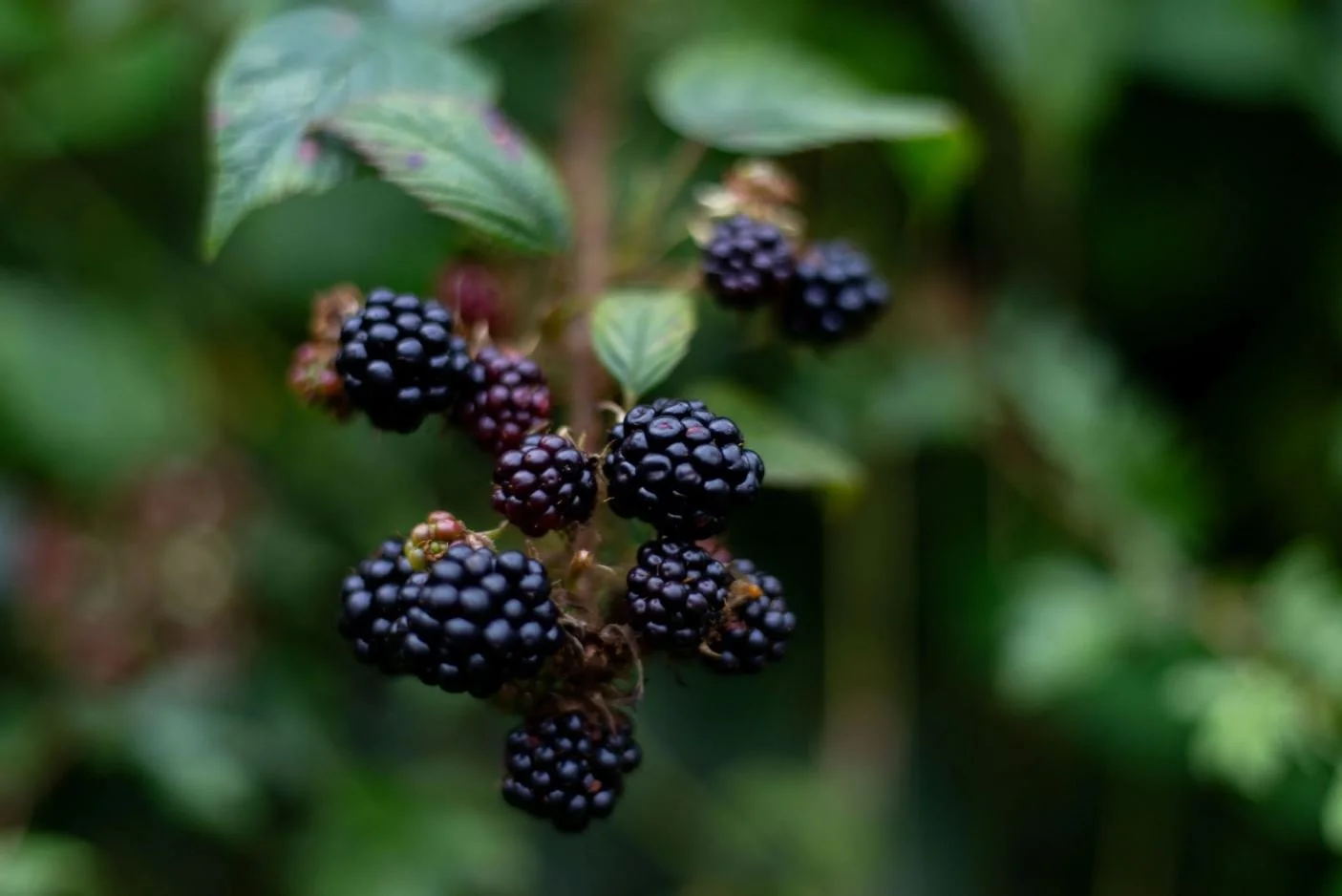
I’ll get to the appropriate actions, or perhaps inactions, straight away: don’t just thoughtlessly clear brambles away. Don’t think of brambles as the enemy, and don’t begrudge them their thorns. I get really cross when the, otherwise lovely, idea of the ‘Permablitz’, a gathering to help friends and neighbours with their plots, just gets used for bramble bashing. My Permaculture students tire of my pro-bramble rants, but the bramble has few vocal allies, and its defence is about more than just the uses of this versatile plant. It’s time to change our outlook, our culture, and to allow the bramble back into our landscape without fear and loathing.
It’s quite true that brambles are conquerors. They want to cover the land, to extend their spiky domain. They’ll steal your hat, and they’ll tear your trousers. The dried dead stems are even sharper and nastier than the living ones.
Spread by birds that eat the fruit and then deposit the seeds, they’ll rapidly cross a piece of land, but it’s the advance of the bramble wall by runners, and the leaping tip propagation, that is most impressive. They evolved in a world full of hungry browsers, and their stems and even their leaves tell this tale with their formidable armoury. Plants of the forest edge, and of the clearing, they’re fast. When we lived in the mountains in France, we had a neighbour whose house, when he’d bought it, had been entirely invisible beneath a crashing bramble wave.
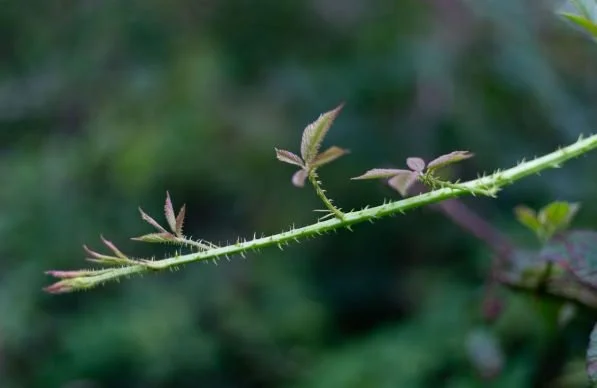
I wouldn’t like you to think of this as a declaration of unconditional surrender. I don’t give the brambles where we live a completely free run. We’ve knocked them back a bit around the edges these last two years. I’ve reached trees that I planted, it doesn’t seem that long ago, five metres, ten metres, back in the brambles. Brambles are good at what they do.
Don’t use poison. Just don’t. The soil, its life, and the plants, are so much more important than us or our need for tidy. There are ways to challenge the bramble frontier though. Livestock will nibble back the young leaves and stems, halting the advance. Cattle and goats will actually eradicate bramble patches in fields. If large livestock is out of the question — we can’t put cattle in our forest garden — then digging out the chokes — the big root clusters — is the surest way to get results. It requires patience, but maturing trees will stop brambles too. It seems like eight to ten years for a stand of young hazel to shade out the spreading briar.
Let’s move past the warfare though, to a reconsideration. The vigour of brambles is a valuable resource that goes to waste if all we do is see it as a terrible problem.
Rubus Fruticosus is a herald of regeneration and of succession. It’s a healer of the land. The bramble wall is soil-building and habitat providing. For the forest edge trees that advance behind it and with it, it’s a crucial nursery. It’s vital for hedgehogs and dormice; its flowers are a rich source of forage for bees and butterflies, hoverflies and beetles. The leaves are important for caterpillars, and the fruit provides a seasonal treasury for song thrushes and other small birds, as well as for mammals and insects.
All very nice, you might say, but what about my torn trousers and my stolen hat?
Quite apart from vital biodiversity benefits, and services to the soil, and therefore to the cleanliness of water in the landscape, brambles can repay richly us for their somewhat inconvenient habits. If only we let them. The fruit is, of course, a sweet seasonal harvest. The young leaves are edible and can be added to soups (make sure to scrape off the little thorns with a knife). I’ve made myself a bramble leaf tea to drink while writing this piece. The medicinal uses of bramble leaves are too many to list here; the stems can be used for basketry (once they are de-thorned!), and to make cordage and ties. Bramble brash can be used to make charcoal (and thus biochar), or they it can be shredded for mulch or compost.
The design question, the cultural question, isn’t whether we should co-exist with brambles, but how much space they should be afforded. Let’s turn that around: how much space do we really need to take from them? Forget tidy for a moment (forever!). If you take that ground away from the brambles, what will you use it for? Will what you use it for be as beneficial to the living world, or even directly to yourself, as the brambles are?
Brambles can be used to meet a wide range of human needs (this is a cultural challenge), and they are a vital member of diverse wild assembles upon which landscape health depends. We might say that we don’t have a surfeit of brambles, we have a shortage of large wild browsers, or of creative ways to live with these plants ourselves.
In Permaculture design, brambles challenge us to think zonally, especially of Zones 4 and 5, those areas we either don’t manage, but which are absolutely essential to us all, or that we manage lightly for seasonal yields. The bramble’s thorns are a salutary reminder of limits and of how we must accept them.
Our fair share is not as great as that which we’ve taken, and the brambles offer us this lesson generously and beautifully.
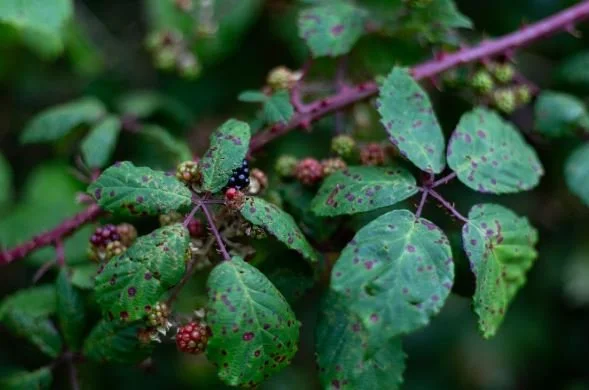
Photo Credit: All images by Sarah Grounds (https://www.sarahgrounds.com/)