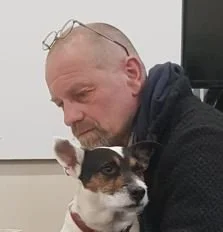
People, Numerous and Diverse
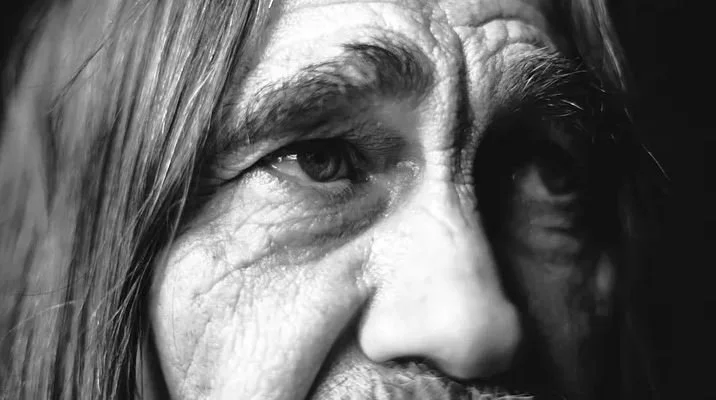
‘Woody’ Image by Sarah Grounds
Living in mass society presents us all with problems we are ill-equipped to deal with. We live surrounded by strangers, and most of us have moved house, and even town, more times than we care to count. In workplaces and accommodation we live alongside people we have known, will know, only for short periods of time. All of this is very new for our species.
For the vast majority of the time humans have been on Earth we have known the same group of people all of our lives, whether in a band, a village, or a neighbourhood. So we come to the contentious Dunbar Number, and the question of how many people we should ideally interact with, have in our lives, close to us. What is the ideal maximum size for a group of humans? We might, by the way, ask the same question of chickens, and the answer definitely isn’t 4,000 or 10,000, or however many might be crammed in a commercial chicken house.
As Graeber and Wengrow highlight in The Dawn of Everything, the Dunbar Number may lead to the quite wrong conclusion that people are incapable of organising at scale without hierarchy, but I’m going to give that debate a swerve. What I want to consider instead is the fact that for many of us, those involved in activism, community building, or Permaculture, the problem isn’t that we have too many people to cope with, but that we don’t have enough.
Activists aren’t alone in this. Very many people don’t have enough people close to them. ‘Water, water, everywhere, nor any drop to drink.’
We must make some effort to understand the difference between a person in a meaningful community relationship with us, and a person who is just another stranger who happens to be around. Minimalist definitions of community don’t help us approach the problem.
If a human community is just a collection of people in the same area, and all of the fundamentals of their lives are mediated by outside organisations — the state, companies or charities, powered by the flow of oil — to the extent that they actually depend for their lives upon very few, if any, of the people in the space around them, then that arrangement is less a community than a crowd of strangers who have been reduced to consumers, claimants and subjects. Each of them is strongly linked vertically to the same systems, but linked horizontally hardly at all.
“Friends,” you might respond, “lovers!” Friendship and love are important, central even to human happiness, but all of us have a long list of friends who drift into and out of our lives as we, or they, move on. There must be more to community than an occasional pint together, or the exchange of bodily fluids, or Hallmark Valentine’s Day cards.
Community is only strong to the extent that it extends to people we don’t consider friends. It’s when we recognise interdependence beyond affection, and solidarity beyond love, where mutual aid exists because we depend upon it for our lives, that we find community.
Individualists, and the atomised, often seek the antidote to the mass society in simplicity and solitude. It’s sometimes called the good life. Some people even imagine that it might be the solution to the fundamental, Earth-shattering problems of modernity. But there’s no viable community in this direction either. The Back-to-the-landers get old, their gardens get overgrown, the houses they bought up cheap in the ruins of an earlier agrarian age become too expensive for the next generation of refugees, and usually their kids become back-to-the-city folks.
For those of us interested in projects that we hope might point the way to some ecological alternative to the status quo, it’s our lack of numbers that so often defeats us. We might personally have enjoyed years on the land, letting out the chooks and celebrating great harvests, but it’s not Permaculture, at least not in the fullest sense of a system moving towards a permanent culture. It’s not viable in the ways that matter, and it doesn’t have, in itself, the power of social reproduction.
How many people do we need then, if our projects are to have some chance of viability?
We know that a human community is viable, that is that it is more than the sum of its individual parts, when it contains multiple generations, and meets their needs. This means that young adults aren’t leaving, or at least when some leave, others arrive. It also means that old timers aren’t driven into exile, but have a place at home. Children and old timers can be hard work. They are also extraordinarily important. Industrial society steals these people from our days, and we are all the weaker for the segregation. Culture is about transmission: it must be taught and learned, and this can’t be done without generational diversity.
A viable human community needs diverse passions and skills. This is true of even the most specialised of human societies, and especially so if we are to find the joy and beauty that arise from art and craft in life, and indeed, from living as art.
Not everyone wants to do everything. There are growers, and builders; makers and menders. There are cooks and poets. As we age our focus and our energy changes. Being involved in Permaculture at twenty five, is different to be involved at fifty five, and that is normal and natural. It just means you need that twenty five year old coming along behind you. And when you’re eighty five, they’ll be fifty five, and they’ll need another twenty five year old behind them.
Continuity, consistency, time after time, and for the long years after they put you in the ground under a young fruit tree, are created from a diversity of ages, passions and skills.
These things also spring from resilience. There are hard times. If the only person who can drive the truck breaks their leg then everyone else is suddenly going to wish they’d paid attention to getting their licence. The year that one passionate gardener is ill in the spring, they’re going to need help. This is the great collectivist lesson: we all need help, if not all of the time, then certainly much of the time. The pride of the pioneer and the bravado of the individualist are psychoses. As David Graeber argued, everything that we do, everything that we achieve, is built on default communism. That is our species’ natural condition.
The more resources we have, the bigger plot, the greater the potential, the more our imaginations run away with us, the more people we need in our community. There is an alternative, but it’s ugly and fragile: we can get more and more and, so that we don’t have to share it, we can simplify it, it can all be managed from a farm office, one product, one customer, no hedgerows. A silent spring in a land of lonely kings.
I don’t know exactly how many people we need around us at a minimum. I feel like there have to be young people. I feel like if you live in a place where there are no babies then something has probably gone wrong already. I feel like if there’s not some people getting on in years, podding peas and passing on skills, a bit slower at getting around than they used to be, then you need to wonder what’s going to become of you when you get old, and who might already be planning your exile, and not caring where they’re going to put your bones. I feel like we need our brothers and sisters, our aunts and uncles, our cousins. I feel like we need tight networks in which our friends have those people as well. I feel like we have to stop moving, and we have to reconnect.
I don’t know how we find our way back to having enough people with us instead of just having strangers around us, but I am absolutely sure that that’s what we need. It’s not a romantic vision of a rural idyll, in any event it’s not the “family farm.” It’s a brutally simple fact that we need each other. The Earth doesn’t care if you say that you couldn’t live in close association with the people you clearly need. None of us can go on living in the Fool’s Paradise of the mythical human individual. It’s been said that it takes a village to raise a child. I’m convinced that it takes a village to be a human being.